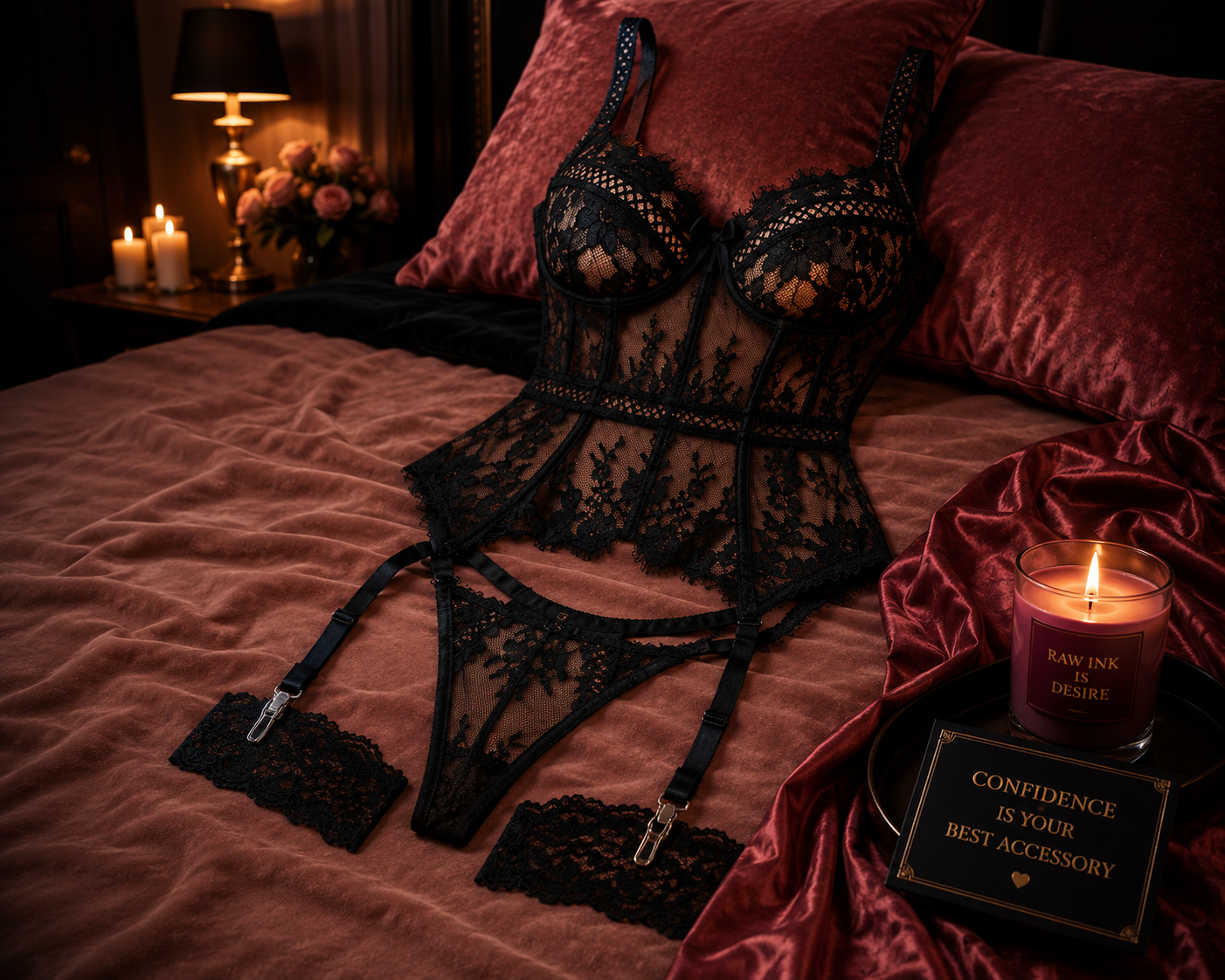
The short answer
A bodice, corset, and bustier can all cover roughly the same area of the torso, but the words describe different things.
A bodice is usually the upper part of a dress or a fitted upper-body garment. It can be soft, tailored, boned, or heavily structured.
A structural corset is a separate fitted garment built to shape and support the torso through patterning, rigid or semi-rigid structure, and usually adjustable lacing.
A bustier is closer to longline lingerie: it usually supports and shapes the bust, often with underwire, cups, seams, or light boning, but it normally does not depend on substantial waist compression.
Modern fashion complicates all three words because retailers use “corset top,” “corset bodice,” and “bustier” very loosely.
So when you shop, the useful question is not only “What does the seller call it?”
It is “What is this garment actually built to do?”
What is a bodice?
In modern clothing language, a bodice is most commonly the upper section of a dress—the part that covers the torso above the skirt.
A bodice can also be a separate upper garment.
That means “bodice” describes where the garment is and how it relates to the rest of the outfit more than it describes a single support system.
A wedding dress can have:
A soft draped bodice.
A boned bodice.
A lace-up bodice.
A corset-style bodice.
A bodice with cups.
A bodice with an internal corset.
Those are not automatically the same construction.
Can a bodice have boning?
Yes.
This is where the terminology starts confusing shoppers.
Boning by itself does not make every garment a corset.
Boning can be used to:
Keep a strapless neckline upright.
Prevent fabric from collapsing.
Support cup seams.
Create a smooth vertical line.
Add decorative “corset” styling.
Provide real structural shaping.
A boned wedding-dress bodice may be strongly structured without being a separate corset.
A fashion top can have a few plastic bones simply to keep its shape.
When a listing says “boned,” the next question should be: how much structure, where is it placed, and what is the garment claiming to do?
What is a corset?
For shopping purposes, it helps to separate structural corsets from corset-inspired fashion.
A structural corset is patterned around the torso and uses rigid or semi-rigid support to hold a deliberate shape. Traditional and modern corsets commonly use multiple panels, boning, strong fabric, and adjustable lacing.
The fit is not supposed to come only from stretch.
If the purpose is meaningful waist shaping, the measurements through the waist, ribs, hips, and vertical torso become important.
Our Corset vs Bodysuit Lingerie Guide goes deeper into how structural corset fit differs from stretch lingerie.
What is a “corset top”?
Sometimes it is a corset that is intended to be seen as outerwear.
Sometimes it is a fashion top borrowing corset details.
That second category can include:
Decorative lacing.
Exposed seams.
Plastic boning.
A pointed front hem.
Hook-and-eye closures.
Bust seams.
Satin or brocade fabric.
None of those details alone tells you how much shaping the garment provides.
A corset-inspired top can be a perfectly good purchase if you want the look rather than waist reduction.
The problem starts when a shopper expects structural corset behavior from a garment that was designed as a fitted top.
What is a bustier?
A bustier is a close-fitting garment that supports and shapes the bust while extending down the torso.
Think of it as living closer to bra construction than traditional corsetry.
A bustier may use:
Underwire.
Bra cups.
Longline bands.
Light boning.
Vertical seams.
Hook-and-eye closures.
Straps or a strapless neckline.
It may smooth or define the waist, but the fit is usually fixed rather than adjusted through substantial back lacing.
A bustier can be lingerie, bridal foundation wear, or outerwear.
Corset vs bustier: the practical difference
If both pieces are hanging on a website and look almost identical, look at how the fit is created.
A corset usually relies more heavily on rigid structure, panel shaping, and adjustable compression.
A bustier usually relies more heavily on cups, underwire, seaming, light boning, and a fixed clothing or bra-like size.
That distinction matters when you need bust support.
A bustier with actual bra cups may give you useful cup sizing.
A corset may support the torso and bust differently, especially if it is underbust.
Bodice vs corset: why Google results can feel incomplete
A dictionary answer usually says a bodice is the upper part of a dress and a corset is a shaping garment.
That is correct—but it does not solve the modern shopping problem.
Today a product can be called:
Corset bodice.
Boned bodice.
Corset top.
Bustier top.
Bustier corset.
Corset-style camisole.
Those labels describe aesthetics as much as construction.
So the buyer has to look past the title.
A lace-up back does not automatically mean corset
Lacing can be functional or decorative.
Functional lacing should meaningfully change fit or tension.
Decorative lacing may:
Sit over a zipper.
Tie over elastic.
Adjust only slightly.
Exist mainly as a visual detail.
Look at the back photos.
Ask whether the garment can actually open, close, and change circumference through the lacing.
If the listing says “lace-up” but the garment also has a hidden zipper and the laces barely move, the lacing may be mostly styling.
Hook-and-eye closures do not settle it either
Bras, bustiers, shapewear, bodysuits, longline bras, and corset-inspired tops all use hook-and-eye closures.
So do some corsets.
Hardware is a clue, not a diagnosis.
The better question is what the garment does when fastened.
Does it hold a structured shape independently?
Does it stretch substantially?
Does it compress the waist?
Does it support the bust through cups?
Is there adjustable lacing?
Does the seller give torso measurements?
Does plastic boning mean it is fake?
Not automatically.
Plastic boning can be appropriate in lighter lingerie, bridal bodices, bustiers, costumes, and fashion tops.
The issue is expectation.
If you want light structure, plastic boning may be enough.
If you want significant waist shaping, a garment built mainly from stretch fabric with a few flexible plastic stays is probably solving a different problem.
Do not turn material vocabulary into a quality contest without asking what you need the garment to do.
Does steel boning automatically make it a good corset?
No.
A poorly patterned garment does not become well fitted because the listing says “steel boned.”
Structure has to match the body.
For a true structured corset, useful information includes:
Waist measurement.
Rib or underbust measurement.
Hip measurement.
Vertical length.
Expected lacing gap or fit.
Construction details.
If a seller gives you almost none of that information but promises dramatic shaping, the missing information matters.
Which one gives the most waist shaping?
Usually a properly fitted structural corset.
A bustier can define the waist but normally prioritizes bust support and torso smoothing rather than major reduction.
A bodice can provide almost any level of structure because “bodice” is a broad garment term. You have to inspect the actual construction.
Which one gives the most bust support?
There is no automatic winner.
A bra-sized bustier can provide familiar underwire-and-cup support.
An overbust corset can support the bust through torso structure, but the fit requirements are more specific.
An underbust corset leaves you free to choose a separate bra.
A dress bodice may contain built-in cups or an internal support layer.
The product category is less important than the support system inside it.
Which one is easiest to wear as a top?
All three can appear as outerwear.
A fashion bodice or bustier often behaves most like ordinary clothing.
A structural corset may require more careful sizing and adjustment.
If your only goal is a corset-inspired silhouette with jeans or a skirt, you may not need a true waist-shaping corset at all.
That is not “settling.”
It is buying the tool for the job.
The RID 60-second listing test
When a seller uses corset/bodice/bustier language, check six things.
1. What does the size chart measure?
Only S/M/L?
Bra band and cup?
Waist?
Ribs and hips?
More structural garments should usually give you more structural information.
2. Does it stretch?
A heavily stretchy garment behaves differently from a rigid torso-shaping piece.
3. What is the lacing doing?
Can it actually change the fit, or is it decoration?
4. Where is the support?
Bra cups?
Underwire?
Boning?
Rigid panels?
Elastic?
5. What does the seller promise?
“Corset-inspired” is different from “waist reducing.”
6. Can the photos prove the claim?
Look at side and back views, not just the front glamour shot.
For a full listing audit, use our How to Buy Lingerie Online Without Guessing guide.
Reader questions, answered
What is the difference between a bodice and a corset?
A bodice is usually the upper part of a dress or fitted upper garment. A corset is a separate structured garment designed to shape and support the torso. A bodice can contain corset-like structure, which is why modern product names overlap.
Is a corset bodice a real corset?
Sometimes a dress has genuine internal corsetry. Sometimes “corset bodice” simply describes boning, visible seams, cups, or lacing inspired by corsets. Check the construction rather than the label.
Is a bustier basically a corset?
Not exactly. Bustiers generally behave more like longline bra-style lingerie, using cups, underwire, seaming, and lighter structure. Corsets are more focused on structural torso shaping.
Can a bustier have boning?
Yes. Light boning is common in bustiers. The presence of boning does not erase the difference in how the garment is fitted and what it is designed to do.
Can a bodice be worn by itself?
Yes. Historically and in modern fashion, bodice can describe a separate upper garment as well as the upper part of a dress.
What if I only want the corset look?
Then a corset-inspired top or bustier may be the better purchase. You do not need structural waist reduction just to wear visible boning, lacing, or a pointed corset-style silhouette.
The RID bottom line
Do not let three words make the buying decision for you.
Bodice tells you where the garment lives.
Bustier usually tells you how the bust is supported.
Corset should tell you something about structural torso shaping.
Modern fashion mixes those ideas constantly.
So read the garment, not just the title.
If the seller cannot explain how it fits, what supports it, what adjusts, and what it is designed to change, the word “corset” on the product page is not enough information.